Sunday, March 3, 2024

Projects for 2024 at Centro PUMA

Each year that passes we have been able to focus more on our projects and less on how to keep our organizations surviving. After most nonprofits were closed down over the past 2 years in Nicaragua, Centro PUMA has successfully completed our first year under the legal and financial control of the tour guide cooperative, COTUCOGUITO. The majority of our funding still comes from Guías Unidos, a project of Earth Island Institute (a 501 (c)(3) organization) in the USA, but now Centro PUMA’s projects also get financial support from our café and direct environmental grant organizations such as Green Grants Foundation, as managed by COTUCOGUITO. Here’s a look at our 3 main projects for 2024, the Junior Ranger program, free English classes, and a new reforestation experiment.

Junior Ranger program
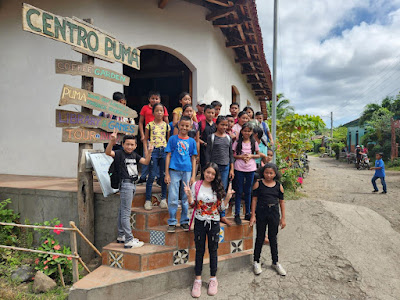


Our Junior Ranger program is a year-long, environmental education program for 5th and 6th graders local to Centro PUMA. The heart of the program begins during January, the last month of “summer vacation” for 26 kids before returning to school from the holidays. We led half-day classes twice a week for 4 weeks, culminating in an all-day excursion around the island.

Classes included daily games and teambuilding activities.
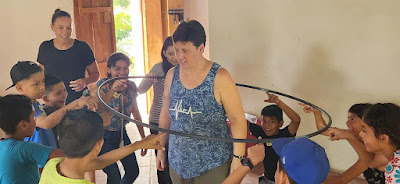


Topics included Leave no Trace, plants, animals, water, ecosystems, and geology/volcanoes.

Field trips are not part of school curriculum, and locals rarely are able to visit and enjoy the tourist attraction that their local island offers, so we try to change that with our excursion. So we rented a school bus for the day
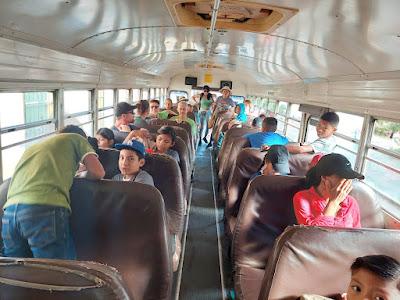


and took them to Finca Magdalena to visit the historic coffee farm and take a hike to the petroglyphs.


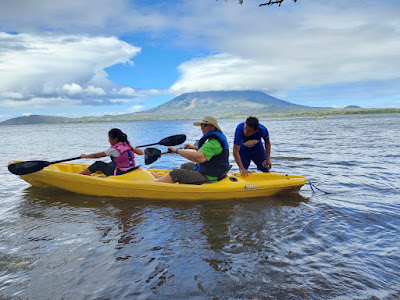
Next, we went to Playa Peru and took each kid individually on a kayak paddle along the bay. It was each kid’s first time, so we paired each of them with an experienced adult, but we let the kids do the paddling, of course!

We visited Peñas Incultas, one of the best-preserved tropical dry hardwood forests in Nicaragua.
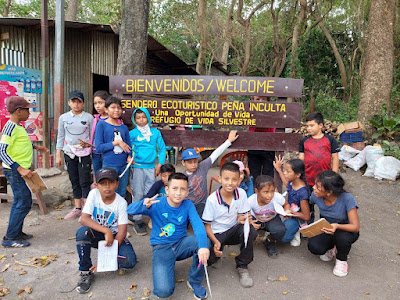

Peñas incultas is one of the best nesting areas for the yellow-naped amazon parrot, a critically endangered species that has one of its last strongholds on Ometepe Island. Sure enough, we saw the endangered parrots and even found a beautiful feather.
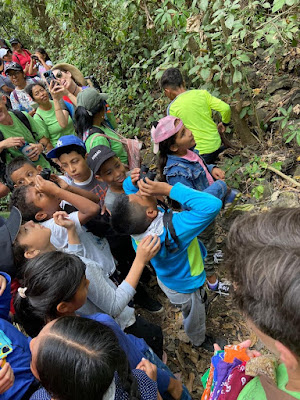
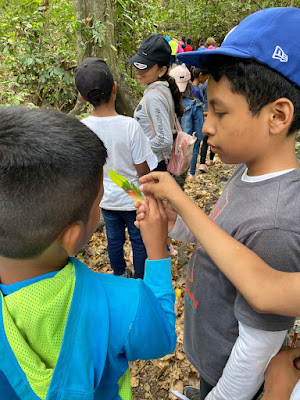


Finally, we ended the day on the beach where the kids got to play in the water (with 3 adult lifeguards around the kids at all times)
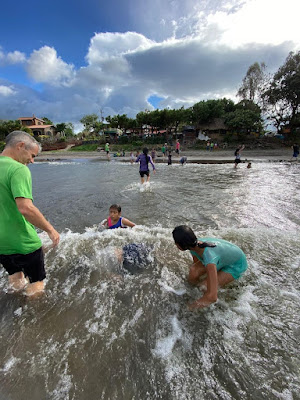


and play games on the beach until they were exhausted and brought home.
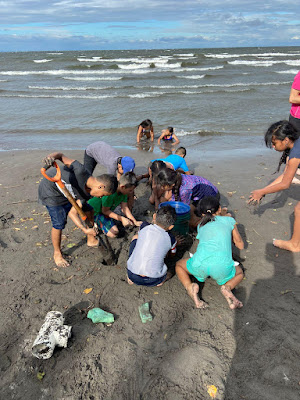


We are continuing the Junior Ranger activites on a monthly basis until they complete a final project and graduate at the end of the year. Graduated students will continue to be invited to events and to work with the project as they grow up, cultivating a new generation of stewards of the environment.


English Classes

Every year we put out a call to the community for free saturday English classes. Initially, it was hard to generate interest, but as our popularity has grown each year, things really started to grow, especially by last year, when we got over 60 students. Well, we weren’t quite ready for the explosion to continue at the same rate, so when over 130 kids signed up, we had a problem as the enrollment petitions didn’t stop. As we put the latecomers on a waitlist, we still had to figure out how to more than double our capacity from last year.

There were a few days of chaos, trying to organize the kids into classes at staggered times. Occasionally, we've had to squeeze kids into our library, which was not originally designed for classes:
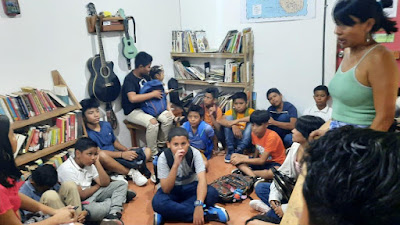


But we eventually broke the kids into groups of fewer than 20 kids into 3 periods of the day, for a total of 7 classes. This is followed by a 4th “period” of our English Café activity open to youth and adults to practice English over a complimentary cup of coffee.
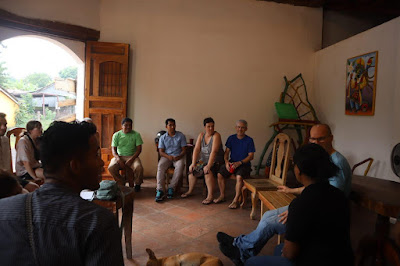


Even with staggering the classes throughout the day, it was still necessary to have up to 3 classes running simultaneously. This had to be achieved while keeping Centro PUMA’s café open. Centro PUMA has one dedicated classroom and an auditorium that can be used as café seating or closed off as a classroom. The café has a reception/dining room, library, and an outdoor shelter for clients. In the past, we held English classes in the café areas and library, but with its increasing popularity this year, we can no longer share the cafe space. So we fast-tracked a long-term project we’ve been planning, to build an additional shelter outside with a palm-thatched roof as an additional classroom area, the “Rancho.” The extra classes and the Rancho were not originally budgeted this year, but with a lot of local help and with a healthy donation campaign at the end of 2023, we were able to finish the Rancho just in time for the school year beginning in February, and we hope to continue campaigning for sufficient funds to keep our classes going. Here's our new rancho and a volunteer helping Arlin teach english classes: 
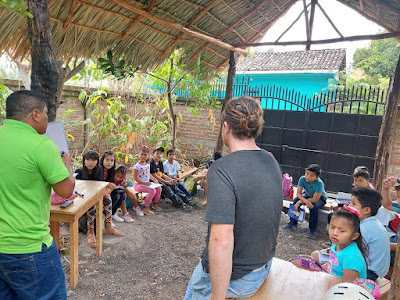


In addition to sustaining our English classes throughout the year, we are offering English classes and tutoring during the week to the kids waitlisted after the original enrollment of 130. In all, our small center is serving up to 150 kids with English lessons. It has been encouraging to see many tourists and foreigners inquire about helping, who show up at classes to read or talk to kids. Weekly classes are not enough to fully learn a language, but we hope to inspire kids by scheduling fun activities and exposing their ears to different accents and native speakers along with our local experts who use English with tourists.

Reforestation

We have been planting thousands of trees every year, but it has sadly become evident that just planting trees is not enough. With no actively protected areas on the island, most trees succumb to agricultural needs or are cut down for firewood. Our monitoring of our previous reforestation efforts has shown that fewer than 10% of the trees live for more than 3 years. This year, the guide cooperative of Centro PUMA is armed with a new grant from Global Greengrants Foundation to investigate new reforestation strategies. We will compare our previous strategy of planting on private and public lands upon invitation, but we will augment with 2 experimental strategies: paying landowners a yearly stipend depending on the survival of their trees, and renting land where we will plant and protect trees at our own expense. The ultimate goal of this project is not just to have better survival rates, but to identify the true cost of reforestation so that we and future projects can make more realistic budgets for true reforestation efforts.
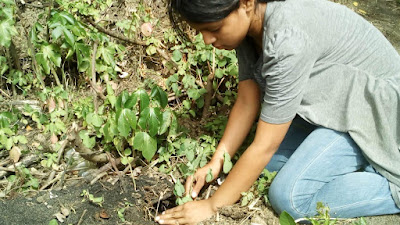


There is a quote of unknown origin (sometimes attributed without proof to Martin Luther) that says, “Even if I knew that tomorrow the world would go to pieces, I would still plant my apple tree.” This is a good philosophy for our project. It’s hard to tell which of our trees will survive, which of our lessons will be remembered, which of our kids will be inspired. Though we hope to maximize our impact with proven methods, we take our projects day by day, creating small experiences for all our people involved no matter what tomorrow may bring.

Monday, April 10, 2023

2023: A new normal?

 This season was all about reestablishing Centro PUMA and its programs, and getting the café into full swing. 

Some things established themselves while we were gone - the garden went from a stomped-down construction zone with a few baby plants to a tropical oasis in less than a year.

Photos by Reese Hume

Somethings took a lot more effort, of course. These folks are who makes that happen!


After several months of being closed due to legal restructuring of our partner organization, we reopened the café in December 2022. We quickly got noticed by tourists, national and international, and locals on a date night. We offer vegetarian and vegan meals that can't be found elsewhere in our part of the island, and the best cup of coffee in Altagracia!


English classes continued for local kids, growing from a couple of dozen students to 60 with a waiting list. We are adding classes at different times to accommodate the overflow. New evening classes for adult beginners are also popular.


We didn't get our legal status in time to do our full Junior Ranger program this year, but we were able to do a few lessons in March, culminating in a final excursion to natural places on the island.


Photos by Reese Hume

The environmental education students also decorated the classroom with a new mural, featuring some of their favorite plants and animals:


The project is moving along, and we look forward to what we can accomplish together next year!


Thursday, December 8, 2022

A photo guide to getting from the airport in Liberia, Costa Rica to Ometepe Island, Nicaragua

Note: As of July 2023, COVID-19 requirements are no longer in effect for Nicaragua and Costa Rica. No vaccine card nor negative PCR test are required. 

All of this information was first made in 2022 and updated in 2026, so prices and other details may change. All prices are per person unless otherwise noted.

What you need before you go:
- Have your passport up to date, valid at least 6 months beyond when you plan to return to your home country. CR requires an outward bound ticket within 180 days of arriving, this is only occasionally enforced at airports, but is almost always enforced when entering CR from a land border--be prepared!

- You need US dollars in exact change, crisp bills with no rips, stains, or markings. You’ll have to pay $10 for the Costa Rican exit fee (unless you pay ahead online at https://www.bancobcr.com/wps/portal/bcr/bancobcr/personas/solicitudes_en_linea/pago_impuesto_salida_terrestre/, then it’s only $8, but have a receipt!), $1 to enter the Nicaraguan border building, $13 for the Nicaraguan entry fee, and taxis will take payment in USD as well.

- Nicaraguan immigration will want to know where you are going to stay when you’re in country. A hotel reservation screenshot or a friend’s phone number and address should suffice, but have those on hand when going through the border. They will also usually ask your profession, so have a simple answer for them – teacher, lawyer, something of that sort. They do not typically allow reporters in as a profession, nor any materials associated with reporters. Sometimes Nicaragua asks for a return ticket as well, but it is variable--better to have one ready just in case!

- Nicaraguan customs will take drones, possibly binoculars, sometimes large telephoto lenses, and they search books, so be aware of what you are carrying. If you have multiple laptops or smartphones, or anything else of great value, they may want to tax you. Most consumer cameras are fine.

- The trip from Liberia to Ometepe takes many hours, so unless you land in Liberia in the morning, you might want to plan to stay a night there. Our favorite place to stay is Hospedaje Dodero, and reservations via booking.com are recommended.

When you land at the Liberia airport, follow the crowd through immigration (an official will stamp your passport – they will ask about when you are leaving the country, so be prepared to answer here too--if you are staying less than 12 hours you can get a "transito" visa and avoid the $8 fee), pick up any checked luggage, then go through customs (you’ll have to run your bags through an x-ray, and they will occasionally ask to see your passport). No forms are needed for immigration or customs. There are money changing booths in the room with immigration and another with baggage pick-up. 

After the luggage x-ray, you’ll go through a door and be confronted by all kinds of drivers with signs for who they are there to pick up. There will be a person there to help you get a taxi if you want one ($20 to town, 15 minutes, or $70 to the border, 1.5 hours) – they keep the taxi drivers honest. Taxis are out the door to the right. If you would rather take a bus, go to the left and to the far side of the airport (30-45 minutes plus wait time, 600 colones (about $1), pay the driver at the front of the bus – they may ask you to go to the back of the bus if you have luggage, or to put it under the bus if there are many people with lots of luggage). Taxis directly to the border are about $70.


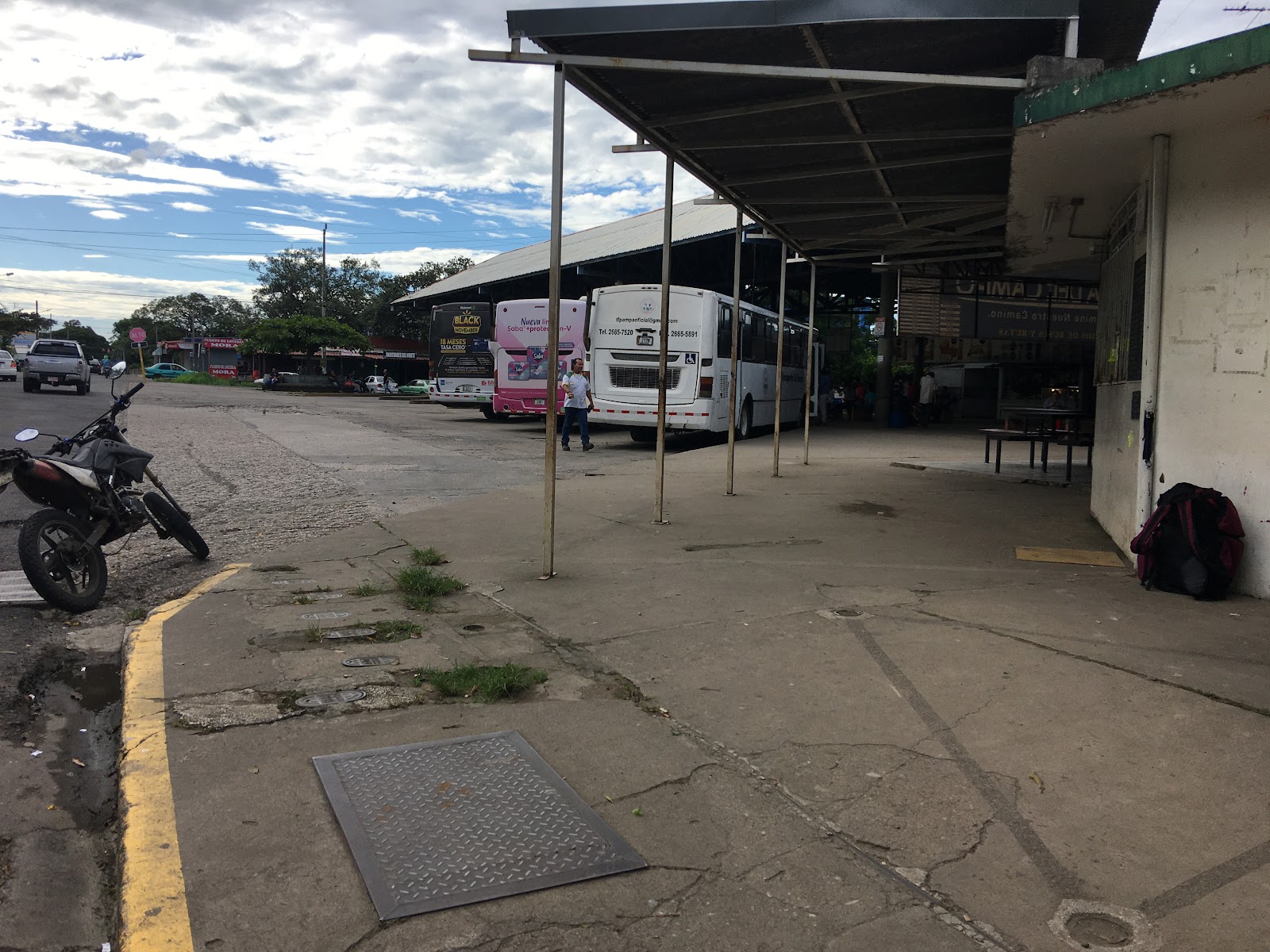
Busses from the airport to Liberia will drop you near the main bus station, often one block east. (Taxis obviously will drop you where you’d like.) Our favorite place to stay, Hospedaje Dodero, is two blocks north.

Photo: If you’re seeing this from where the bus drops you, the bus station is behind you.

In the bus station itself, the bus to the border is the third bus in, helpfully labeled “Frontera” (“border”) in the window and “Liberia – Peñas Blancas” up top. If the bus isn’t there, the folks wandering around selling food and drinks will be happy to point you in the right direction if you ask them “Donde está el bus a la frontera?” You will pay the driver at the front of the bus (<2000 colones per person, less than $4), and also ask them to help you with any bags you want to put under the bus (which will be anything beyond a small bag you can keep in your lap) – your bags are going with you to the last stop, “terminal” or “frontera,” so be sure the driver knows that as they put them below. 


We always do this leg by bus, as taxis in Costa Rica are quite expensive. The ride from Liberia to the border is about $80.

The bus ride takes about 1.5 to 2 hours. You’ll get out at the last stop at the border terminal (new as of 2025). Before you talk to the customs agents, you must have a receipt for the Costa Rican exit tax (unless you came directly from the airport to the border - this tax is waived if you spend less than 12 hours with "transito" written in your passport stamp). Currently there are machines that look like ATMs inside where you can pay it with a credit card, but they have not always reliably worked. It can be paid ahead online (https://www.bancobcr.com/wps/portal/bcr/bancobcr/personas/solicitudes_en_linea/pago_impuesto_salida_terrestre/). Otherwise, there are agents at the terminal selling the exit fee with a commission, $10 total. 

Inside the Costa Rican border building, you’ll need to show that exit tax receipt and your passport, and they’ll give you a stamp. 


Once you’re out, you’ll be walking a ways to the Nicaraguan side with a couple stops along the way to show random police your passport (if walking is too difficult, sometimes there are bicycle taxis who can help). Go north (the bus came from the south):


Cross the road just past the fence:


Just in case the police in the little white shed want to see your passport – they sometimes do, sometimes don’t.


Keep going north, and cross the road again so you can show the police on the sidewalk your passport


You’ll finally get to the Nicaraguan border building.


Once inside the main building, someone will approach you to pay a $1 municipal tax to be in the building. They will often refuse to give change, so have $1 for them. Then you’ll go to one of the windows that is staffed and get your entry stamp – they will want to see your passport and get $13, and they also often don’t give change. They will likely ask for where you are going in Nicaragua, and this is where a screenshot of a hotel reservation or friends’ phone numbers and addresses will be useful. When done there, you’ll go to the x-ray booth to run your baggage through.

The border crossing takes a minimum of about 45 minutes, but if lines are long or if immigration decides to ask you lots of extra questions, it could take two or three hours, sometimes even longer around holidays. This uncertainty is why we only attempt the border crossing with a morning start from Liberia.

Once you are out of the building, keep walking north toward the exit of the parking lot. A couple bus companies can park their busses here, but they are the high-cost companies. If you’re looking for a cheap ride or a taxi, pass by these busses. Head for the exit, where you will show your passport one last time.


Photo: In the background is the last passport checkpoint. We didn't want to appear to be taking the police officer's photo, so this is the best we've got.

As soon as you are past this checkpoint, you will be bombarded with taxis, money changers, and phone sim card vendors. Some money changers offer good value, but be careful of scams. We did get ripped off by a phone sim seller, so we won’t get it there again – we’ll wait until we can get to the real shop near home. If you want to take a taxi to the Ometepe ferry from here, the price should be $20-25 for a private taxi. A collectivo taxi (multiple people), might charge $5 or 100-200 cordobas, but they are hard to find among the private taxistas bomarding you if you look like a tourist. All taxistas will try to upcharge, so prepare to bargain. If you want to take a bus, keep walking north a block or two’s distance until you see the bus station on the left.


The bus will be going at least to Rivas, and perhaps farther north to Managua. In most terminals and stops in Nicaragua, you talk to the bus’s “ayudante” (“helper”) or "cobrador" (the fee person), not the driver. You don’t pay up front, you wait for the ayudante to come by sometime on the ride to take your money.

Photo: A particularly crowded bus with the ayudante taking money. If you don’t give exact change, don’t be shocked if the ayudante takes your larger bill and walks away for a while – they will return with your change before you leave the bus.

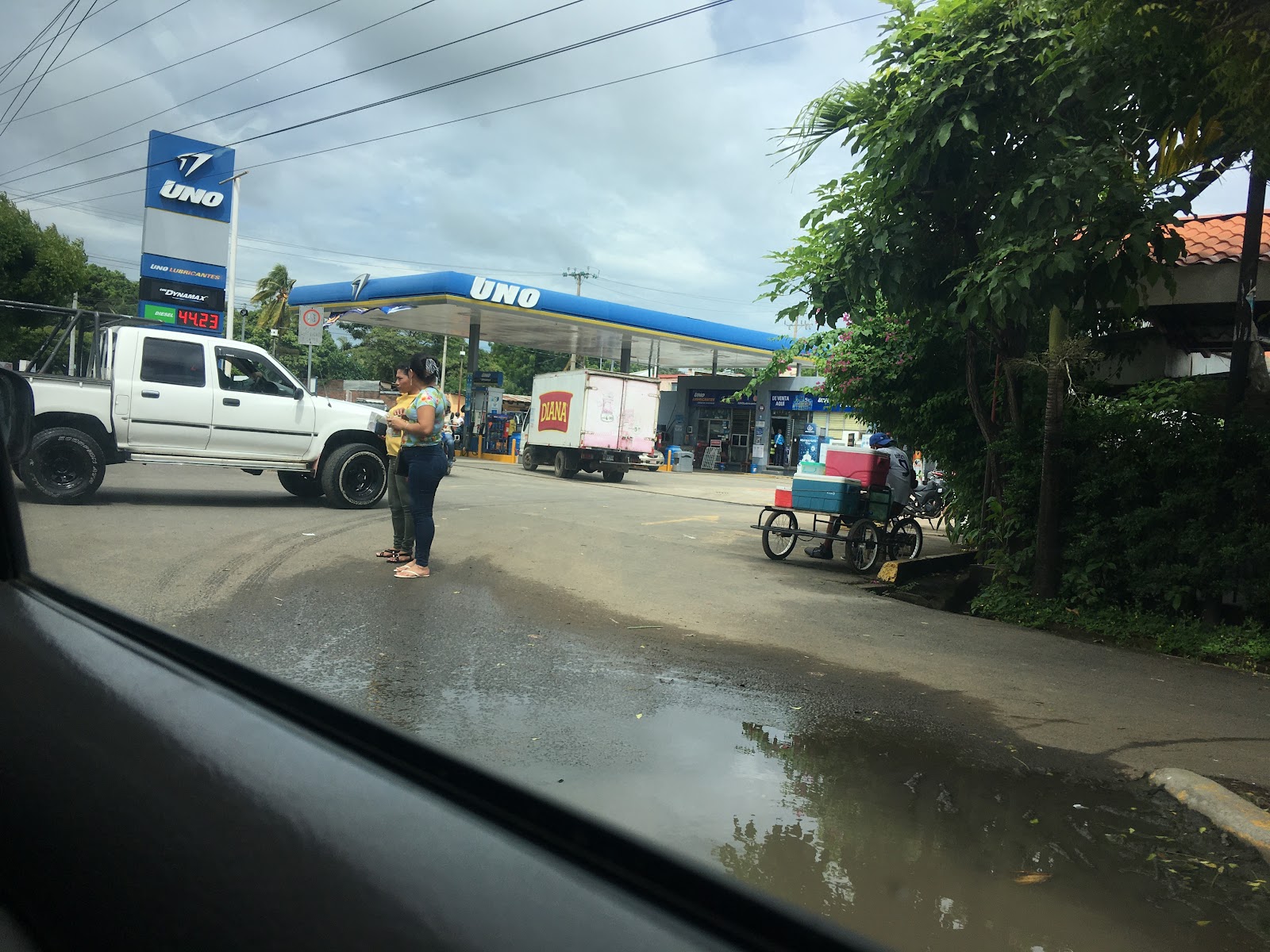
You will take the bus from the border to “la gasolinera UNO” in Rivas (40 cordobas or just over $1, less than one hour). Those going to SJDS should get off at "La Virgen." If you say you’re going to San Jorge (the mainland port town for the ferry to Ometepe), they should offer “la gasolinera,” and if you ask they will hopefully let you know when you’re near the stop so you can get off in time. It is easy to miss this stop, so it's good to ask someone to help you, or us a map app or take a taxi if you are not certain. Rivas-direct buses will turn into the bus station, which is about 5 blocks west of the gasolinera, where you will be bombarded with aggressively overcharging taxistas, so if you end up there, it's best to walk east towards the gasolinera and get a cheaper taxi. Colectivos to San Jorge are waiting at the UNO station.

Photo: The sign before the gasolinera in Rivas, as seen from the bus.

Photo: The gasolinera at the turnoff to the Ometepe ferry, you should get off here!

When you get off at the gasolinera, you can take a “colectivo,” or a taxi that will pick up other people on the way (40 cordoba or $1, ten to fifteen minutes). They may charge you a little more for being a foreigner, or charge you up to double if you have extremely bulky luggage, but never pay more than double the going price! Double check before boarding, or risk being surprised by whatever the taxista wants to charge you.

Photo: “Colectivos” or taxi rideshares who will take you from the gasolinera to the ferry dock.

**NOTE** There have been reports of fraud at the port. If someone comes up to you here and tells you that you need reservations for transportation on the island, or that there are no hotels with space, etc – IGNORE THEM. They will at best charge you an unnecessary commission, at worse they scam you with a fake ticket. If someone offers to help you through the process of paying fees and buying ferry tickets, sometimes they are legit or being helpful – but as soon as they say they can arrange transport, hotels, or tours for you on the Ometepe side, get away from them.

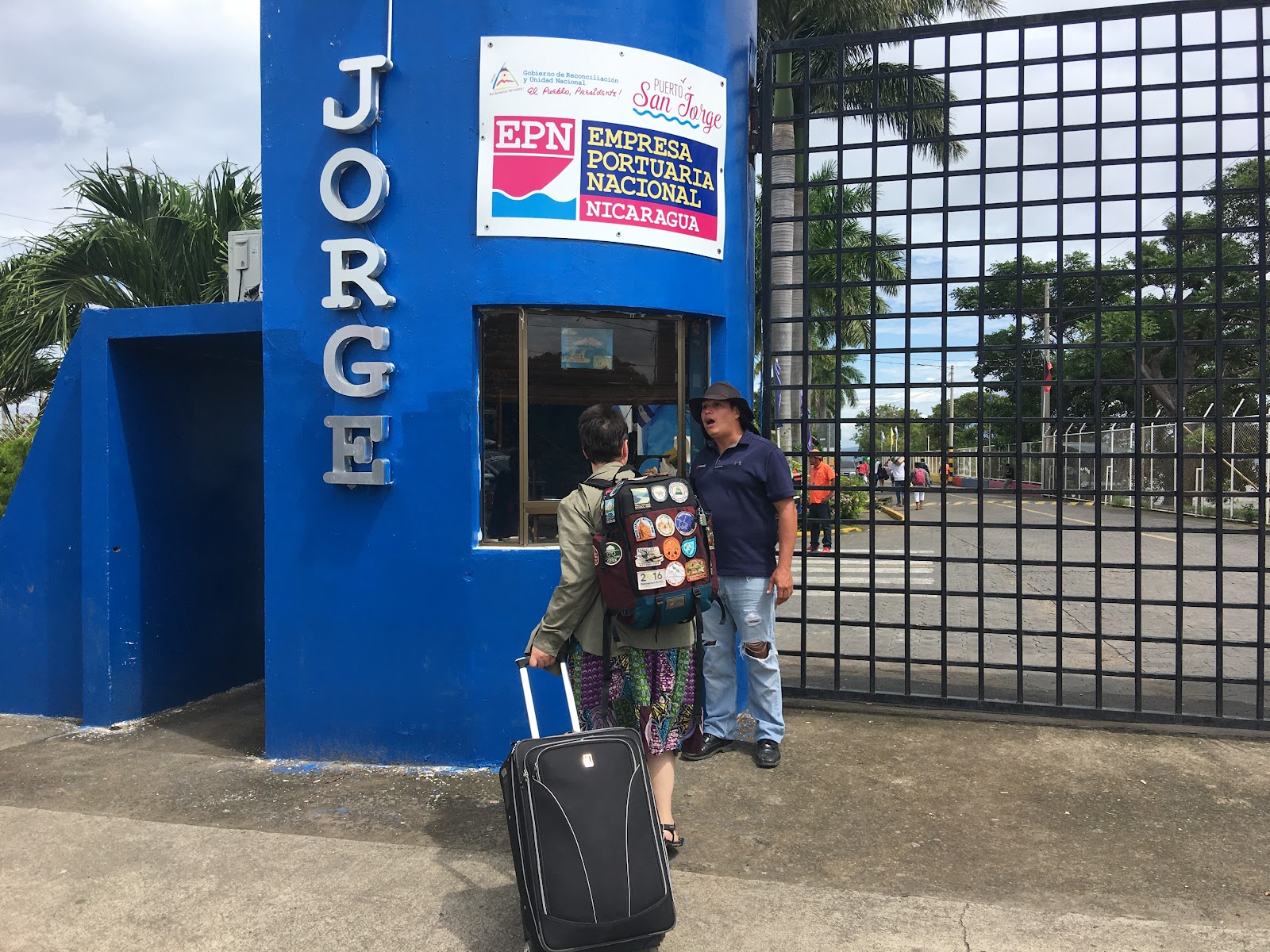
You will be dropped off outside the gate to the port. At the small booth next to the gate, you’ll pay a $1 (they usually keep up with the current exchange rate) port fee. You will be given a small receipt – keep this on you just in case you are asked for it, which rarely but occasionally happens. THIS IS NOT YOUR FERRY TICKET.

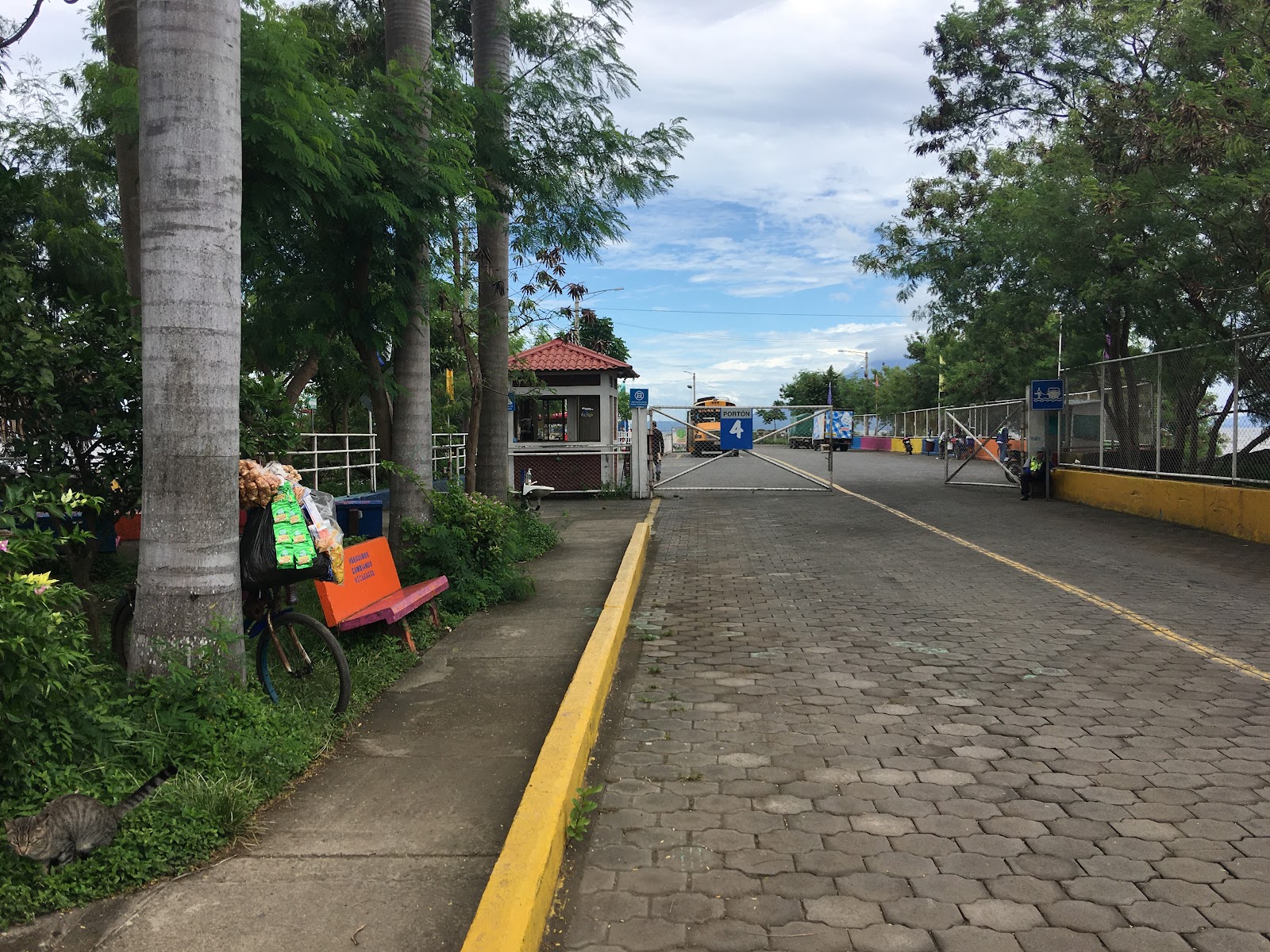
Pass through the gate and walk past the parking lots. You will see a set of buildings on the left where you can purchase ferry tickets (50 cordobas). If the ferry is about to leave in the next ten minutes, sometimes you can skip this step and buy your ticket on the ferry during the ride (sometimes they check your ticket at the next gate, however). If you have time, they prefer you buy tickets at these windows. Check the schedule above the awnings for which ferry company is providing the next ferry, then go to that company’s window to buy your ticket. They are usually honest at the window and will tell you if they are the next ferry or not, and you'll usually see a line of people at that window. We try to keep the schedule up to date at centropuma.com.


Keep walking toward the dock. If you have lots of extra time, there are public bathrooms and a couple small restaurants that you can relax at, buying a drink or a meal. Once it’s time for the boat, you’ll pass through another gate where someone will approach you with a clipboard and ask you to write down your name and passport number. This is required by the government for everyone boarding the ferry.


Enjoy the ride! It takes a little over an hour from San Jorge on the mainland to Moyogalpa on the island. (Two ferries a day go to San Jose del Sur, another port on Ometepe that isn’t too far from Moyogalpa – if you end up on this ferry, the landing is pretty simple, as there is *usually* a bus waiting which will take you to Altagracia, or a taxi for 500 cordobas. For the purposes of this blog, we’re assuming you land in Moyogalpa.)


The exact dock you’ll land at in Moyogalpa depends on the schedule and water level. They are close together, and within the gated port area. As you exit the port gate, on the right hand side is a building marked “Ferry El Che Guevara.” The buses wait between this building and the gate to the port. We try to keep bus schedules up to date at centropuma.com. If you want a taxi, it will be hard to not find a taxi driver in this area, $20 to Altagracia. 

This is an older photo pointing toward the bus stop near the "Che Guevara" booth, the concrete pillars are now the gate into the newly reconstructed port. 


The bus will sometimes be waiting when the ferry comes in and take off shortly after, but sometimes it won’t. At most you might have to wait an hour for the next bus. 

Busses from Moyogalpa all go to Altagracia first (22 cordobas, 1 hour), and will sometimes continue on to the other side of the island. Busses are economical, as taxis are more expensive than the mainland, but it depends on how much time you have. Some taxistas will tell you there are no buses to trick you into buying their service--be careful!

Photo: The bus stop at the park in Altagracia

If you’re heading to Centro PUMA in Altagracia, which we highly recommend, you’ll get off at the main Altagracia stop at the park, then walk one block ahead, turn left, and go one block more. We’ve got refreshing coffee and smoothies for the weary traveler, a chill place to hang out, and good tour info if you’re interested. Visit our webpage, google profile, or facebook page for our updated opening hours:
Google: https://g.co/kgs/7nhCLD
Facebook: https://www.facebook.com/guiasunidosnicaragua/


If you’re heading to the Maderas side of the island, you can go into Altagracia and pick up a bus at the main station at the park going to Balgue or Merida. All Maderas busses will pass through Santo Domingo and Santa Cruz. Or if you want to skip Altagracia, you can get off the Moyogalpa-Altagracia bus at El Quino (pronounced El Key-no) and wait there for the next bus heading your way. Sometimes a bus is waiting at El Quino for the Moyogalpa-Altagracia bus to pass to pick up passengers transferring to the south end of the island (like the pink bus in the picture below). We try to keep bus schedules up to date at centropuma.com

Photo: The bus stop at El Quino

Enjoy your stay on La Isla, the oasis of peace!

Update 2026: There was a form for entering the country that is no longer asked for. The form is found at https://solicitudes.migob.gob.ni/ and more information can be found at https://nica-biz.com/entry-to-nicaragua-online-application-form/. In 2026 the form no longer works and the border no longer asks for it, but information about it still confuses people. To the best of our knowledge, it is no longer required.