
What you need before you go:
- Have your passport up to date, valid at least 6 months beyond when you plan
to return to your home country. CR requires an outward bound ticket within 180 days of arriving, this is only occasionally enforced at airports, but is almost always enforced when entering CR from a land border--be prepared!
- You need US dollars in exact change, crisp bills with no rips, stains, or markings. You’ll have to pay $10 for the Costa Rican exit fee (unless you pay ahead online at https://www.bancobcr.com/wps/portal/bcr/bancobcr/personas/solicitudes_en_linea/pago_impuesto_salida_terrestre/, then it’s only $8, but have a receipt!), $1 to enter the Nicaraguan border building, $13 for the Nicaraguan entry fee, and taxis will take payment in USD as well.
- Nicaraguan immigration will want to know where you are going to stay when you’re in country. A hotel reservation screenshot or a friend’s phone number and address should suffice, but have those on hand when going through the border. They will also usually ask your profession, so have a simple answer for them – teacher, lawyer, something of that sort. They do not typically allow reporters in as a profession, nor any materials associated with reporters. Sometimes Nicaragua asks for a return ticket as well, but it is variable--better to have one ready just in case!
- Nicaraguan customs will take drones, possibly binoculars, sometimes large telephoto lenses, and they search books, so be aware of what you are carrying. If you have multiple laptops or smartphones, or anything else of great value, they may want to tax you. Most consumer cameras are fine.
- The trip from Liberia to Ometepe takes many hours, so unless you land in
Liberia in the morning, you might want to plan to stay a night there. Our
favorite place to stay is Hospedaje Dodero, and reservations via booking.com
are recommended.
When you land at the Liberia airport, follow the crowd
through immigration (an official will stamp your passport – they will ask about
when you are leaving the country, so be prepared to answer here too--if you are staying less than 12 hours you can get a "transito" visa and avoid the $8 fee), pick up
any checked luggage, then go through customs (you’ll have to run your bags
through an x-ray, and they will occasionally ask to see your passport). No
forms are needed for immigration or customs. There are money changing booths in
the room with immigration and another with baggage pick-up.
After the luggage x-ray, you’ll go through a door and be
confronted by all kinds of drivers with signs for who they are there to pick
up. There will be a person there to help you get a taxi if you want one ($20 to
town, 15 minutes, or $70 to the border, 1.5 hours) – they keep the taxi drivers
honest. Taxis are out the door to the right. If you would rather take a bus, go
to the left and to the far side of the airport (30-45 minutes plus wait time, 600
colones (about $1), pay the driver at the front of the bus – they may ask you
to go to the back of the bus if you have luggage, or to put it under the bus if
there are many people with lots of luggage). Taxis directly to the border are about $70.


Busses from the airport to Liberia will drop you near the main bus station, often one block east. (Taxis obviously will drop you where you’d like.) Our favorite place to stay, Hospedaje Dodero, is two blocks north.

In the bus station itself, the bus to the border is the
third bus in, helpfully labeled “Frontera” (“border”) in the window and “Liberia
– Peñas
Blancas” up top. If the bus isn’t there, the folks wandering around selling
food and drinks will be happy to point you in the right direction if you ask
them “Donde está el bus a la frontera?” You will pay the driver at
the front of the bus (<2000 colones per person, less than $4), and also ask them to help you with any bags you want to
put under the bus (which will be anything beyond a small bag you can keep in
your lap) – your bags are going with you to the last stop, “terminal” or
“frontera,” so be sure the driver knows that as they put them below.
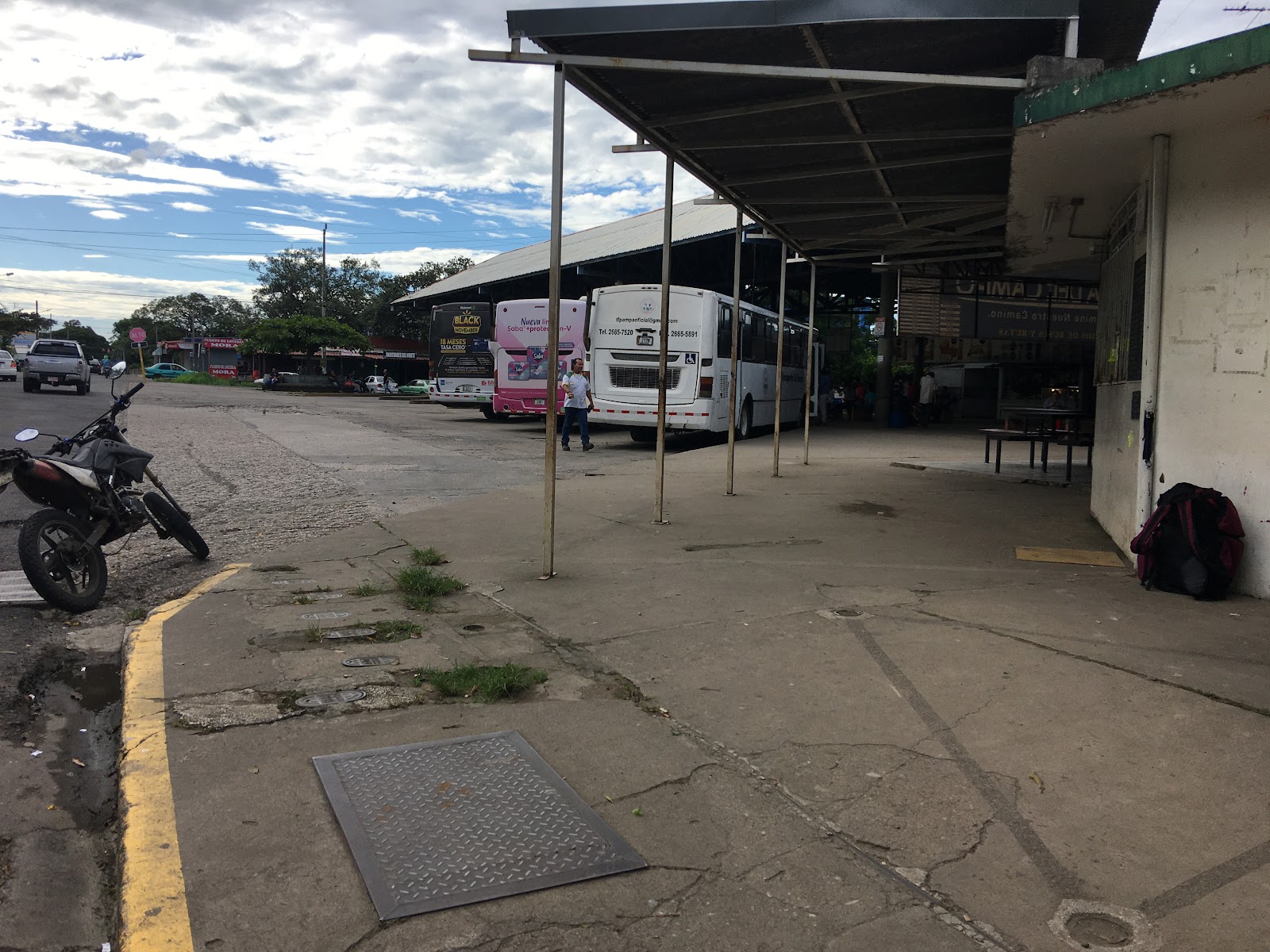


We always do this leg by bus, as taxis in Costa Rica are quite expensive. The ride from Liberia to the border is about $80.
The bus ride takes about 1.5 to 2 hours. You’ll get out at the last stop at the border terminal (new as of 2025). Before you talk to the customs agents, you must have a receipt for the Costa Rican exit tax (unless you came directly from the airport to the border - this tax is waived if you spend less than 12 hours with "transito" written in your passport stamp). Currently there are machines that look like ATMs inside where you can pay it with a credit card, but they have not always reliably worked. It can be paid ahead online (https://www.bancobcr.com/wps/portal/bcr/bancobcr/personas/solicitudes_en_linea/pago_impuesto_salida_terrestre/). Otherwise, there are agents at the terminal selling the exit fee with a commission, $10 total.
Inside the Costa Rican border building, you’ll need to show that exit tax receipt and your passport, and they’ll give you a stamp.
Once you’re out, you’ll be walking a ways to the Nicaraguan side with a couple stops along the way to show random police your passport (if walking is too difficult, sometimes there are bicycle taxis who can help). Go north (the bus came from the south):

Cross the road just past the fence:

Just in case the police in the little white shed want to see
your passport – they sometimes do, sometimes don’t.

Keep going north, and cross the road again so you can show the police on the sidewalk your passport

You’ll finally get to the Nicaraguan border building.

Once inside the main building, someone will approach you to
pay a $1 municipal tax to be in the building. They will often refuse to give change,
so have $1 for them. Then you’ll go to one of the windows that is staffed and
get your entry stamp – they will want to see your passport and get $13, and they also often don’t give change. They will likely ask for where you are going in
Nicaragua, and this is where a screenshot of a hotel reservation or friends’
phone numbers and addresses will be useful. When done there, you’ll go to the
x-ray booth to run your baggage through.
The border crossing takes a minimum of about 45 minutes, but if lines are long
or if immigration decides to ask you lots of extra questions, it could take two or three hours, sometimes even longer around holidays. This uncertainty is why we only
attempt the border crossing with a morning start from Liberia.
Once you are out of the building, keep walking north toward the exit of the parking lot. A couple bus companies can park their busses here, but they are the high-cost companies. If you’re looking for a cheap ride or a taxi, pass by these busses. Head for the exit, where you will show your passport one last time.


As soon as you are past this checkpoint, you will be bombarded with taxis, money changers, and phone sim card vendors. Some money changers offer good value, but be careful of scams. We did get ripped off by a phone sim seller, so we won’t get it there again – we’ll wait until we can get to the real shop near home. If you want to take a taxi to the Ometepe ferry from here, the price should be $20-25 for a private taxi. A collectivo taxi (multiple people), might charge $5 or 100-200 cordobas, but they are hard to find among the private taxistas bomarding you if you look like a tourist. All taxistas will try to upcharge, so prepare to bargain. If you want to take a bus, keep walking north a block or two’s distance until you see the bus station on the left.

The bus will be going at least to Rivas, and perhaps farther north to Managua. In most terminals and stops in Nicaragua, you talk to the bus’s “ayudante” (“helper”) or "cobrador" (the fee person), not the driver. You don’t pay up front, you wait for the ayudante to come by sometime on the ride to take your money.

You will take the bus from the border to “la gasolinera UNO” in Rivas (40 cordobas or just over $1, less than one hour). Those going to SJDS should get off at "La Virgen." If you say you’re going to San Jorge (the mainland port town for the ferry to Ometepe), they should offer “la gasolinera,” and if you ask they will hopefully let you know when you’re near the stop so you can get off in time. It is easy to miss this stop, so it's good to ask someone to help you, or us a map app or take a taxi if you are not certain. Rivas-direct buses will turn into the bus station, which is about 5 blocks west of the gasolinera, where you will be bombarded with aggressively overcharging taxistas, so if you end up there, it's best to walk east towards the gasolinera and get a cheaper taxi. Colectivos to San Jorge are waiting at the UNO station.

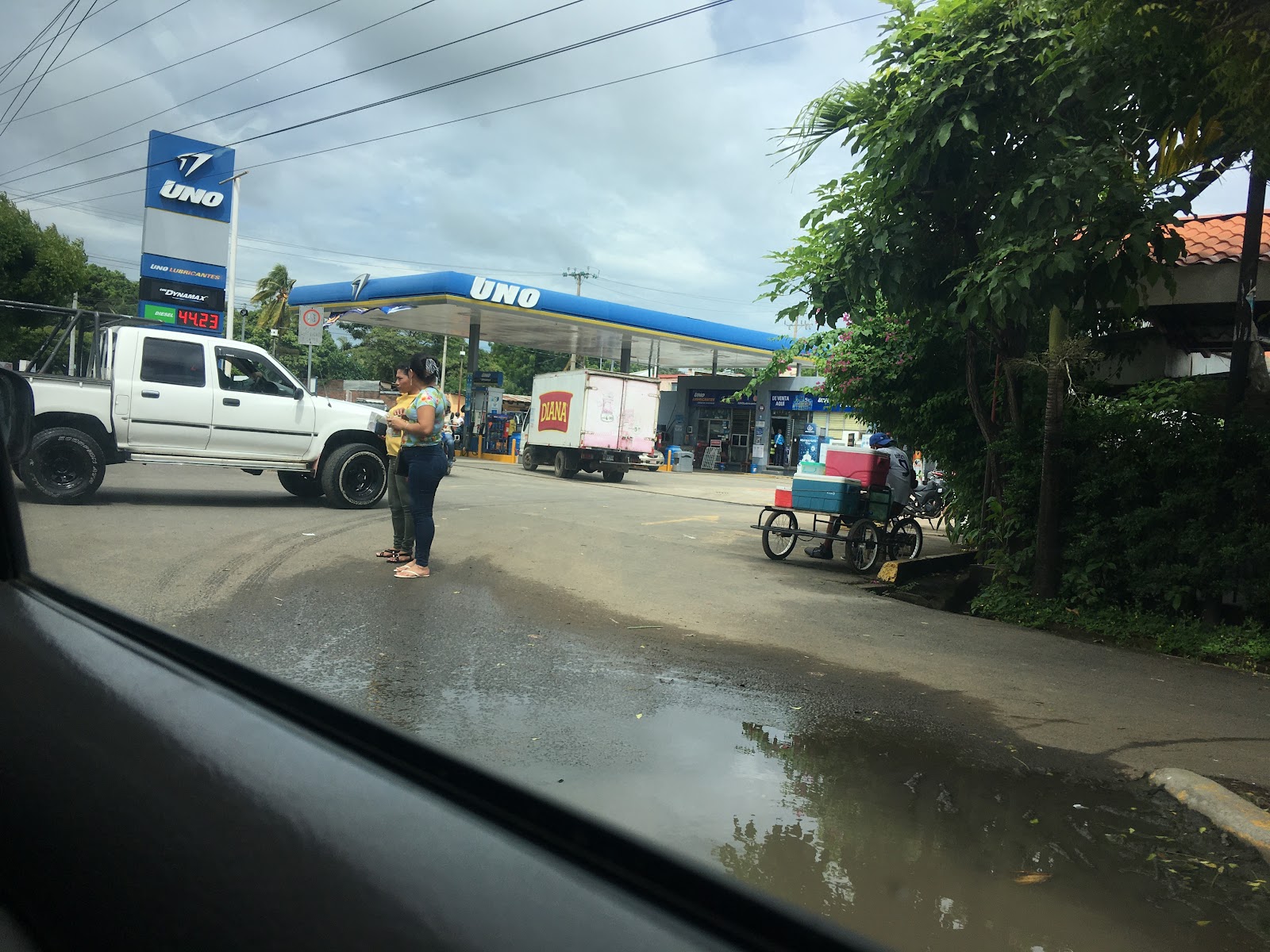
When you get off at the gasolinera, you can take a “colectivo,” or a taxi that will pick up
other people on the way (40 cordoba or $1, ten to fifteen minutes). They may charge you a little more for being a foreigner, or charge you up to double if you have extremely bulky luggage, but never pay more than double the going price! Double check before boarding, or risk being surprised by whatever the taxista wants to charge you.

**NOTE** There have been reports of fraud at the port. If
someone comes up to you here and tells you that you need reservations for
transportation on the island, or that there are no hotels with space, etc –
IGNORE THEM. They will at best charge you an unnecessary commission, at worse they scam you with a fake ticket. If someone offers to help you through the process of paying fees and
buying ferry tickets, sometimes they are legit or being helpful – but as soon as they say
they can arrange transport, hotels, or tours for you on the Ometepe side, get
away from them.
You will be dropped off outside the gate to the port. At the
small booth next to the gate, you’ll pay a $1 (they usually keep up with the current
exchange rate) port fee. You will be given a small
receipt – keep this on you just in case you are asked for it, which rarely but
occasionally happens. THIS IS NOT YOUR FERRY TICKET.
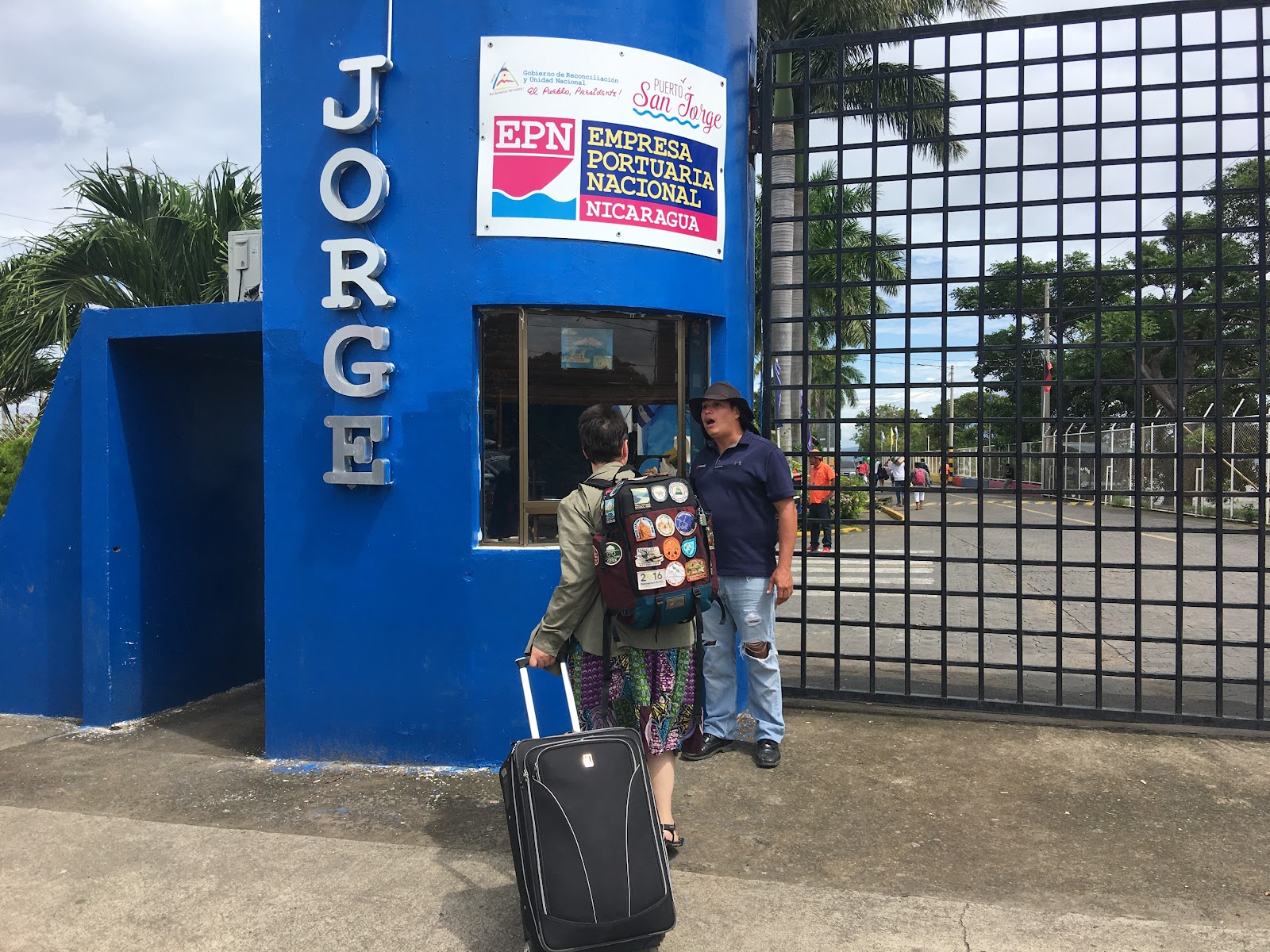
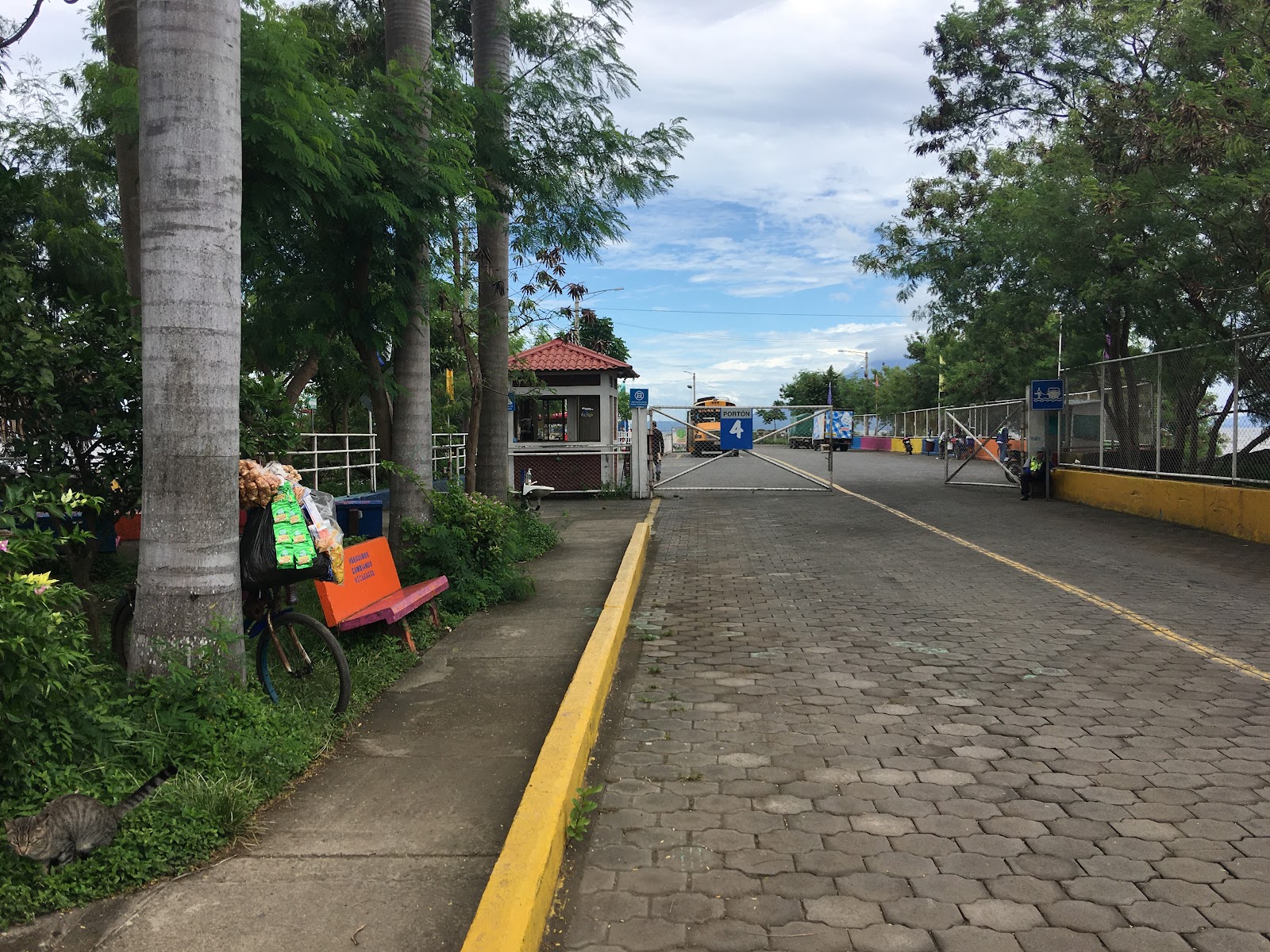
Pass through the gate and walk past the parking lots. You will see a set of buildings on the left where you can purchase ferry tickets (50 cordobas). If the ferry is about to leave in the next ten minutes, sometimes you can skip this step and buy your ticket on the ferry during the ride (sometimes they check your ticket at the next gate, however). If you have time, they prefer you buy tickets at these windows. Check the schedule above the awnings for which ferry company is providing the next ferry, then go to that company’s window to buy your ticket. They are usually honest at the window and will tell you if they are the next ferry or not, and you'll usually see a line of people at that window. We try to keep the schedule up to date at centropuma.com.


Keep walking toward the dock. If you have lots of extra time, there are public bathrooms and a couple small restaurants that you can relax at, buying a drink or a meal. Once it’s time for the boat, you’ll pass through another gate where someone will approach you with a clipboard and ask you to write down your name and passport number. This is required by the government for everyone boarding the ferry.
Enjoy the ride! It takes a little over an hour from San
Jorge on the mainland to Moyogalpa on the island. (Two ferries a day go
to San Jose del Sur, another port on Ometepe that isn’t too far from Moyogalpa
– if you end up on this ferry, the landing is pretty simple, as there is *usually* a bus waiting which will take you to Altagracia, or a taxi for 500 cordobas. For the purposes of this
blog, we’re assuming you land in Moyogalpa.)

The exact dock you’ll land at in Moyogalpa depends on the schedule and water level. They are close together, and within the gated port area. As you exit the port gate, on the right hand side is a building marked “Ferry El Che Guevara.” The buses wait between this building and the gate to the port. We try to keep bus schedules up to date at centropuma.com. If you want a taxi, it will be hard to not find a taxi driver in this area, $20 to Altagracia.
This is an older photo pointing toward the bus stop near the "Che Guevara" booth, the concrete pillars are now the gate into the newly reconstructed port.

Busses from Moyogalpa all go to Altagracia first (22
cordobas, 1 hour), and will sometimes continue on to the other side of the
island. Busses are economical,
as taxis are more expensive than the mainland, but it depends on how much time you have. Some taxistas will tell you there are no buses to trick you into buying their service--be careful!

If you’re heading to Centro PUMA in Altagracia, which we
highly recommend, you’ll get off at the main Altagracia stop at the park, then
walk one block ahead, turn left, and go one block more. We’ve got refreshing
coffee and smoothies for the weary traveler, a chill place to hang out, and
good tour info if you’re interested. Visit our webpage, google profile, or facebook page for our updated opening hours:
Google: https://g.co/kgs/7nhCLD
Facebook: https://www.facebook.com/guiasunidosnicaragua/

If you’re heading to the Maderas side of the island, you can
go into Altagracia and pick up a bus at the main station at the park going to Balgue or
Merida. All Maderas busses will pass through Santo Domingo and Santa Cruz. Or if you want to
skip Altagracia, you can get off the Moyogalpa-Altagracia bus at El Quino
(pronounced El Key-no) and wait there for the next bus heading your way. Sometimes a bus is waiting at El Quino for the Moyogalpa-Altagracia bus to pass to pick up passengers transferring to the south end of the island (like the pink bus in the picture below).

Enjoy your stay on La Isla, the oasis of peace!
Update 2026: There was a form for entering the country that is no longer asked for. The form is found at https://solicitudes.migob.gob.ni/ and more information can be found at https://nica-biz.com/entry-to-nicaragua-online-application-form/. In 2026 the form no longer works and the border no longer asks for it, but information about it still confuses people. To the best of our knowledge, it is no longer required.

No comments:
Post a Comment